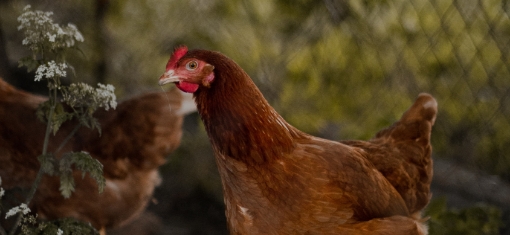
In a press release dated 12 December 2022, Boehringer Ingelheim announced its first convincing results for its vaccine to protect your farm against avian influenza (page in French).
Ceva Santé Animale reported encouraging results at SPACE in September.
Boehringer Ingelheim and Ceva Santé Animale are the two companies putting forward candidate avian influenza vaccines for waterfowl. ANSES (the French Agency for Food, Environmental and Occupational Health & Safety) and the Toulouse veterinary school began testing in May, with the aim of verifying the clinical efficacy of the vaccines and their ability to reduce shedding (the impact and spread of the virus) into the environment.
These promising results allow farmers to look to a calmer future, to secure the poultry sectors and to guarantee the food self-sufficiency they need.
Let’s look back at this avian influenza pandemic, which is hitting our poultry farms so dramatically.
Since autumn 2021, the avian influenza epidemic has been spreading at an unprecedented rate. In France, more than 20 million birds have been culled, and the direct cost is estimated at over one billion euros. On top of that, it weighs very heavily on the morale of poultry farmers.

What is avian influenza?
Avian influenza, or bird flu, is a highly contagious animal disease caused by type A viruses, which can infect a very large number of wild and farmed bird species.
Two categories of virus are commonly distinguished according to their virulence in birds: low pathogenic viruses (LPAI) and highly pathogenic viruses (HPAI), the latter all belonging to subtypes H5 or H7. In its highly pathogenic form, the disease spreads very quickly among birds and causes very high mortality, with serious consequences both on farms and for wildlife.
The virus spreads through:
- migratory birds (geese and ducks in particular) along migration routes (so mainly affecting countries located on these routes)
- trade in live birds (in this case, worldwide)
- between farms, especially in areas where farms are highly concentrated (in this case, locally).
Transmission between birds can occur through the respiratory and digestive routes. It therefore takes place:
– directly through close contact between individuals: breathing or droppings
– indirectly through exposure to contaminated material that birds can reach: feed, water or other equipment
There is no treatment for this disease.
The arrival of the virus in France
Several strains have evolved since the disease was first identified in the early 1960s. The virus (H5N1 strain) was first detected on a large scale in Asia in the late 1990s, then in the Middle East.
In Europe, it was first detected in late 2005 in Romania, probably carried by the trade in live animals. In France, it appeared in February 2006 in the Ain department.
After a few years of apparent respite, new outbreaks occurred in the winter of 2015/2016 with the detection of a new H5N8 strain, linked to mutations of the virus. 4 million ducks and geese were culled in the South-West. The end of the epidemic was nevertheless declared on 5 May 2017.

Again, in autumn 2020, migratory birds were declared potential carriers of the H5N8 virus. 3.5 million waterfowl would once more be lost in the South-West. France was declared free of the disease in September 2021, but outbreaks appeared in northern France as early as November, paving the way for the current epidemic.
It has spread to areas that had previously been little affected, such as the Vendée, with the consequences we know.
Another new feature is that it persisted through spring and summer, speeding up its spread.
Since its first appearance in France, and even more so since the 2016/2017 epizootic, the French protection strategy has relied on surveillance, disinfection measures, confinement and the culling of infected animals.
This strategy is reaching its limits.
Why has vaccination been put off?
Avian influenza is one of the few diseases subject to drastic international health and trade rules. They require exporting countries to demonstrate that the virus is absent.
France, like the vast majority of countries in the world, therefore does not vaccinate. The reason is that vaccinating means accepting that the virus is circulating in the country, which blocks exports of poultry to other countries.
France has historically been a poultry-exporting country. Until now, the avian influenza epidemic was concentrated in the South-West and its duck sector. Waterfowl are more susceptible to infection than chickens.
The other duck-producing areas, notably the Vendée, were not affected, nor were the regions producing chickens for export (Pays de la Loire, Brittany).

The chicken sector carries 20 times more weight than the foie gras sector in exports. In a way, the South-West foie gras sector was somewhat sacrificed.
The cost of large-scale vaccination has certainly been a brake until now.
The scale of the current epidemic has changed the situation. The highly concentrated farms in the Vendée have been hard hit. On the one hand, this affects exports; on the other, it affects the availability of chicks and ducklings. This region is the cradle of poultry farming in France.
Moreover, over the same recent period, countries other than France have also been seriously affected. The epidemic has gone global: in the United States, for example, 50 million birds have been euthanised since autumn 2021. A figure of 5 million has been recorded in Canada. In Europe, it is more than 50 million to date.
Africa is also more affected, although reliable figures are hard to find. Only South America seems to be spared at this date.
The globalisation of the infection is calling the non-vaccination strategy into question.
And tomorrow?

ANSES advocates a combination of several actions:
– strict compliance with biosecurity rules
– keeping birds indoors in autumn and winter, when the risk of contamination from wildlife is at its highest, together with regular testing
– vaccination
– reducing farm density (their proximity to one another and the number of birds per farm).
Ultimately, these are the same common-sense rules we applied during the coronavirus epidemic for humans.
Barrier measures (biosecurity), such as disinfection when handling poultry, could tomorrow include aviaries to protect farmed birds from migratory birds (just as masks do for people). We cannot keep animals from running, eating and breathing fresh air forever. Promoting animal welfare and keeping a bird indoors become contradictory. Farmers who go through lockdowns can see that the birds become more aggressive and eat less well.
Confinement when the level of contamination becomes too high.
Spreading farms out has its counterpart in the fact that, to reduce contamination among people, we are asked to keep more distance in offices or on public transport.
Finally, the vaccine, to stop culling animals en masse. Even those most sceptical about vaccination for humans would not have accepted such a measure for people.
In Europe, only one vaccine has a marketing authorisation. It has been authorised for chickens (Gallus) since 2006.
It has been used on birds in zoos since then during epidemic periods. However, it has not been evaluated on other species and little data exists.
Other vaccines exist around the world, but they have not been assessed for safety and efficacy by the European Union.
Furthermore, as we have seen with coronavirus, producing a vaccine takes time, the stocks of the currently authorised vaccine are too small, and the regular mutation of the virus means the vaccine must be adapted to the circulating strains.
Vaccination appears feasible by the end of 2023. ANSES recommends contamination-control measures on vaccinated farms to monitor the circulation of the virus. Specific protocols (DIVA) can be put in place for this. The agency also advises prioritising breeding farms as well as free-range farms. It also points out that waterfowl are the species most sensitive to the virus and the most contaminating, and that a vaccination policy for this species should be evaluated.
The vaccine will bring added protection and peace of mind. We will have to keep up the other measures and continue screening in order to protect your farm from avian influenza.
France is indeed an exporting country, but on balance it is also a large importer (twice as much as it exports). The notion of self-sufficiency is challenging this model, and future policy will favour local production.
France is also at the forefront of poultry genetics. This sector must remain protected, which is in fact an ANSES recommendation.
CABI solutions to reduce the impact and spread of avian influenza
CABI Group supports animal welfare and therefore supports spreading farms out and protecting free-range farms.
We offer solutions to reduce the impact and spread of avian influenza:
- Fixed poultry houses, movable huts, mobile poultry houses supplied as kits and easy to assemble. This helps reduce the concentration of birds in one large livestock building.
- Hygiene locks to prevent humans from bringing infection into farms.
- Feed silos on wheels that can be moved. This equipment keeps the trucks delivering feed, which go from farm to farm, from coming into contact with the poultry house and so becoming potential carriers of the virus.
We are working on other solutions that will help reduce the risks in the coming weeks.