


You have a superb flock of laying hens, a magnificent chicken coop, and want to offer them the ideal conditions to produce the best possible eggs? Just like the feeder or waterers, the choice of nesting box is crucial for your operation.
In a way, it is your hens’ work tool. You must therefore be rigorous about the selection criteria and leave nothing to chance. We explain everything you need to know to avoid making mistakes and choose the right nesting box for your chicken coop.
The basic rules for a suitable nesting box
The Number of Nesting Boxes per Poultry and Ideal Dimensions
It is generally recommended to allow the equivalent of one nesting box space for three to four hens. You should know that poultry like their little habits, but they also have their moods. They therefore sometimes like to change nesting boxes.
Regarding the surface area, be generous. We don’t know if chickens are claustrophobic, but it’s certain that you need to find the right balance between a reassuring space that provides landmarks and one that is oppressive because it’s too small to turn around in.
For a professional project, you will more readily opt for a communal nesting box. Be aware that you need to provide at least 1m² for 120 hens, which is the equivalent of 7 hens per individual nesting box. If you follow organic regulations, 120cm² per hen will be required. Find out if this applies to you, as it will guide your choice!
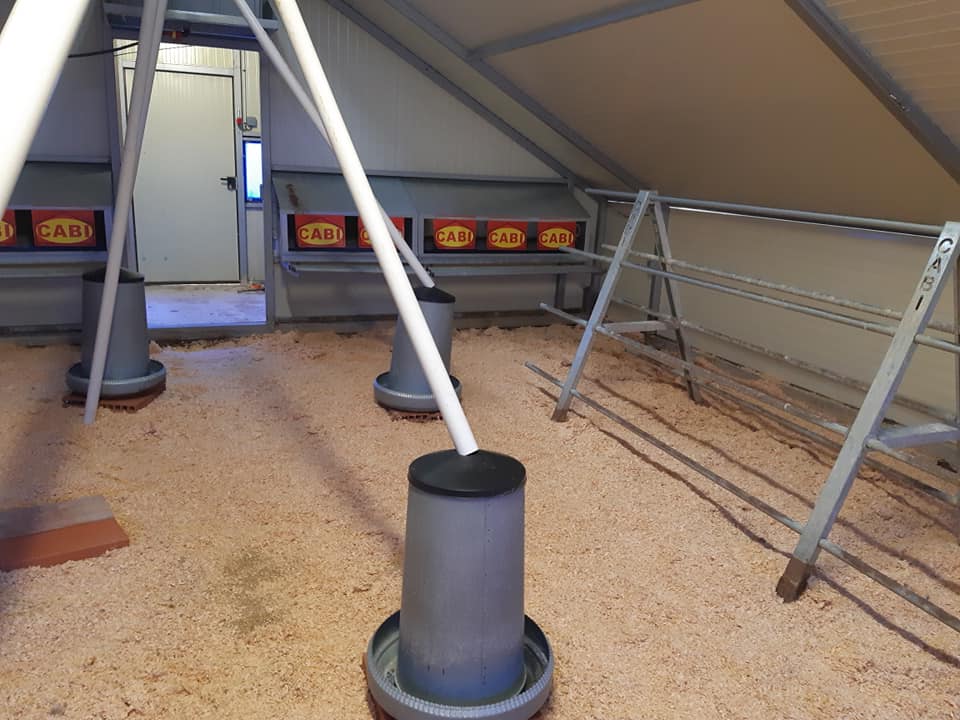
Location and Installation
Think of it as if you were drawing up plans for your future home. Be sure of the location before installing everything. You wouldn’t want to subject your hens to a subsequent move that could disrupt their habits, would you?
Put yourself in their place to find the right height for them: high enough to give them the sense of security they are looking for, but not so high that the nesting box is inaccessible even to the smallest or oldest hens. Also, for comfort reasons, they appreciate being in a quiet place, preferably in low light.
Finally, for hygiene reasons, do not place them in direct proximity to food.
Different Types of Nesting Boxes
Individual Nesting Boxes

Here, each in their own space, or almost, in privileged conditions. They can lend nesting boxes to each other depending on their preference for the day.
Advantages:
- Reduced stress for hens as they have their private space during laying;
- Easier control of egg quality and cleanliness;
- Facilitates monitoring of hens.
Disadvantages:
- Requires more space per hen;
- Higher initial cost, as with all installations offering premium services.
- Narrower, therefore sometimes harder to clean
It is ideal for small family farms, or those specializing in the production of exceptional eggs, to have strict control over production.
Communal Nesting Boxes
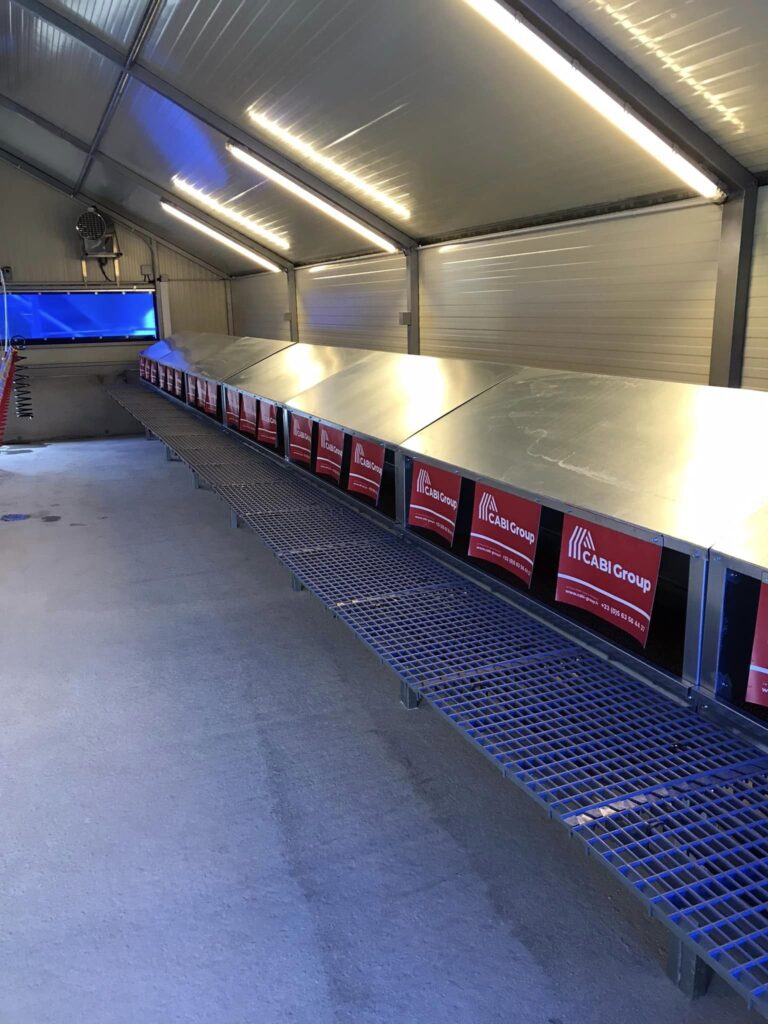
It’s like the dormitory principle from our childhood, in a camp or at grandparents’ houses. Hens have access to the same large, undivided space.
Advantages:
- Space optimization;
- Reduced cost per hen, like any installation that allows for economies of scale;
- Egg collection can be automated.
Disadvantages:
- Competition for access: in a communal nesting area, several hens may be laying eggs at the same time. This can lead to competition for access to nests, which can cause stress and quarrels between hens. In individual nesting boxes, each hen has its own private space, which reduces competition.
- Egg breakage: When several hens use the same nesting box, there is an increased risk of egg breakage, as hens may step on eggs that have already been laid or trample them while trying to find a place to lay. In individual nesting boxes, eggs are better protected against damage.
- Stressful for hens if the space is poorly calibrated, which can affect laying frequency.
They are often used in poultry farms with dozens or hundreds of laying hens where cost optimization is important.
Criteria for choosing your nesting box
Nesting box construction materials
Wood offers a timeless visual appeal, with valuable insulating qualities. However, it is more difficult to maintain and disinfect in case of parasitic infestation. It is particularly risky regarding red mite infestation.
Metal, especially galvanized steel, is obviously less aesthetically warm, but has incomparable durability and maintenance qualities.
There is also plastic, which is easy to handle and clean. It can be a good compromise if it is of sufficient quality to withstand various maintenance manipulations. It is rather preferred for non-professional farms.
The nesting box access system
If the chicken coop and/or the nesting box is elevated, consider access. Think practical. Is the ramp slope not too steep, to limit the effort for the ladies, who already have the daily task of laying?
There can also be an automatic opening and closing system. This is useful to prevent hens from staying in the nesting boxes at night and soiling them.
Your Farming Profile
Think about your daily work, especially egg collection or cleaning. This is an often underestimated point. But with use, and wear and tear, you risk regretting it if you haven’t considered your own well-being.
Also, if your production is subject to specific specifications, these will dictate the criteria to be met regarding dimensions or capacity to be in compliance.
Good Practices for Animal Welfare
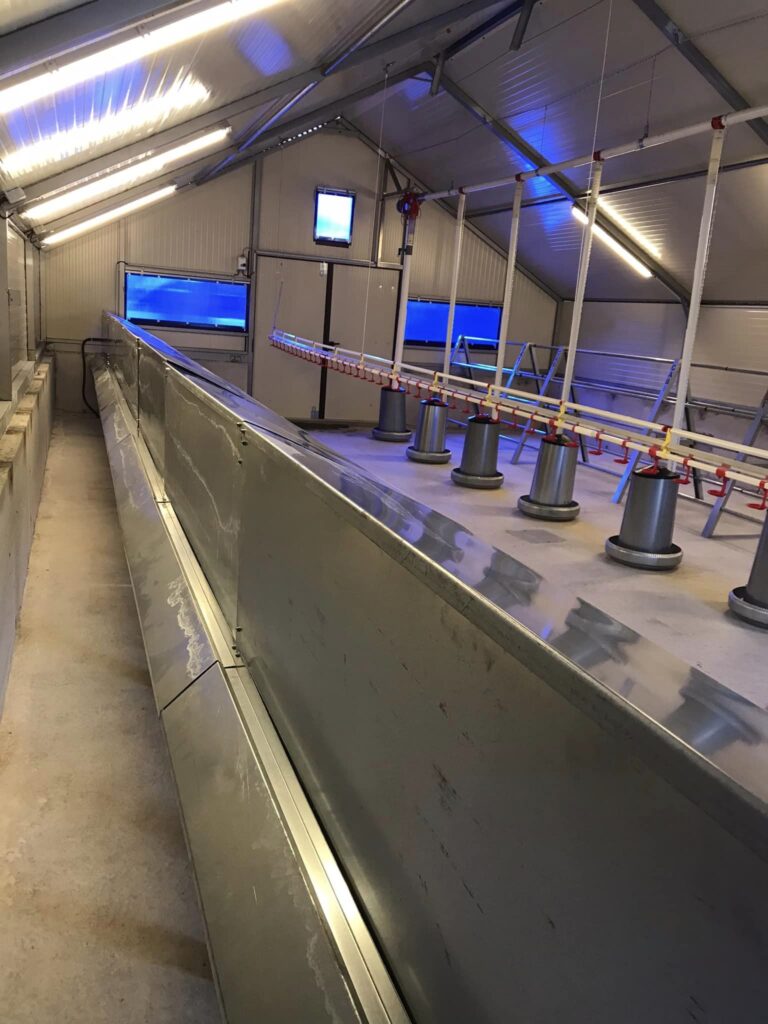
To continue with the rules to follow to ensure the essential welfare required for good laying conditions, let us talk about bedding. The nesting box is a place where they will spend several minutes each day to lay the promised egg, so it must be comfortable.
Astroturf-type plastic mats are a good compromise between comfort and ease of cleaning. They also have a reduced cost and require little replacement.
There is also the option of using bedding. They offer the advantage of comfort, like spelt husks, but on the other hand, they require a high cost and more cleaning and replacement time.
Whatever the chosen support, daily cleaning is essential to ensure good hygiene and dream conditions for the queens of the chicken coop.
Conclusion on choosing the right nesting box
You have plenty of choice when it comes to a nesting box for your chicken coop. However, by prioritising the criteria according to your operation and your budget, you should be able to find what suits you—and ensure the same for your laying hens. Successful egg collections are yours.