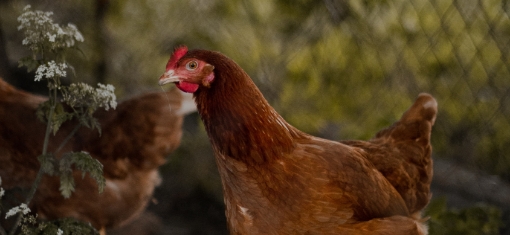
Integrating laying hens into orchards is an agroecological approach that pursues a range of goals:
- Pest management
- Reduction of the TFI (Treatment Frequency Index)
- Improved soil fertility
- Grass management
- Income diversification
- Protection of poultry on wooded runs
Here are a few tips for a successful set-up
1. Think your project through carefully
Time to devote to it
Carefully assess the time available each day, week and month, across the different seasons. Am I planning to assign an employee to it, or to run it with no extra resources and a minimum of time?
Plan for labour during exceptional work peaks and for replacements if needed (especially at weekends to collect the eggs).
Strategic objectives
Define your objectives in order of priority.
- Income diversification by optimising egg yield
- Predation of orchard pests
- Natural grass management in the orchard
- Orchard fertilisation
Through all this, what level of profitability am I looking for from egg production as such?
On one side, maximum profitability, with potentially more time to devote to it and a smaller predation effect.
In that case, I aim for hen breeds with a high laying rate and plan to renew them every 18 months, I closely monitor their health status, I provide quality feed and I sell my eggs at a fairly premium level.
On the other side, I am looking for the predation effect or grass control with a positive effect on fertilisation, and I accept a lower profitability for the flock on its own. I control feed costs, or even reduce them to a minimum. My flock is made up of hardy breeds with a strong foraging instinct and/or I keep them longer.
Marketing
Adapt your sales channel to your objectives
Do I already have a direct sales channel for my current production, so that eggs become a very good complement with no extra marketing cost?
Eggs give me a more regular cash flow.
If you do not already have a sales network in place, assess the potential in your local area. Favour direct sales at the farm or through a vending machine to reduce the time spent, or offer your production to a farmer already selling at markets: eggs are a very suitable product for direct sales.
Sizing
Calibrate the number of hens and the number of flocks to meet your objectives. You can also start with one or two small flocks (50-100 hens) and grow according to your capacity. Note that below 250 laying hens and in direct sales (no sale to an intermediary), you have no administrative obligation to set up an egg packing centre and there are fewer constraints in terms of health inspections.
2. Choose the location and plan the installation
Orchard type and effects on pests
Avoid young orchards (under 3-4 years old), as hens can cause damage by scratching around the tree roots.
Hens are effective in all types of orchards: apple, hazelnut, olive trees…
Impacts have been observed on various types of pests, notably through the scratching of the soil, which disrupts pest life (larvae or rodents), or by direct ingestion of the larvae:
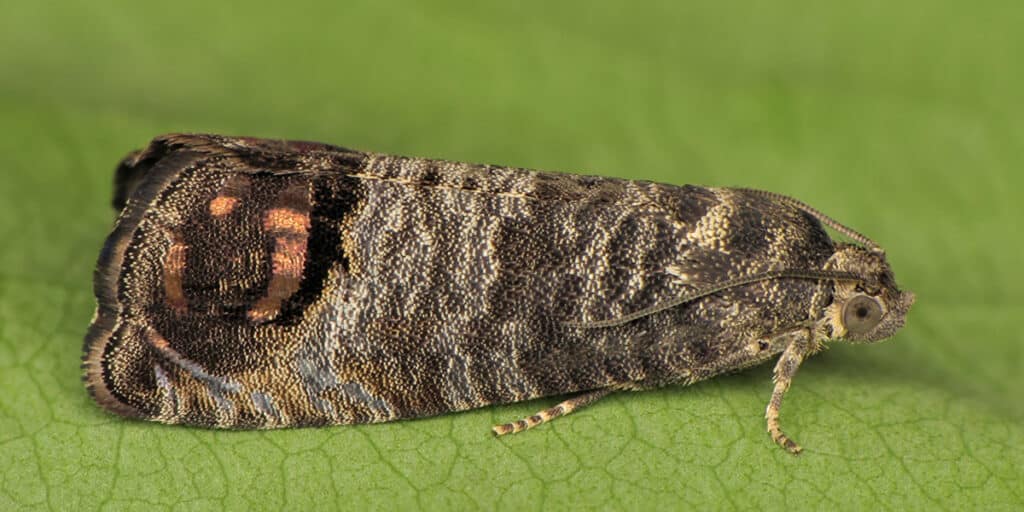
Carpocapse
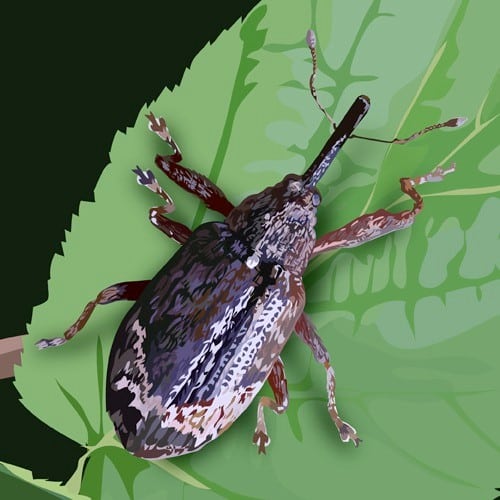
Anthonome
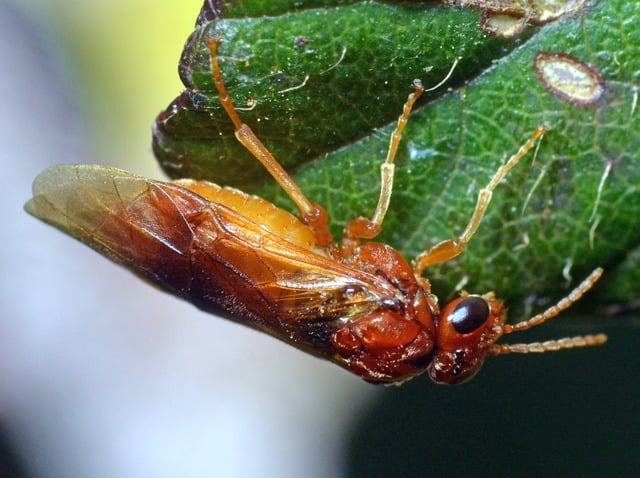
Hoplocampe
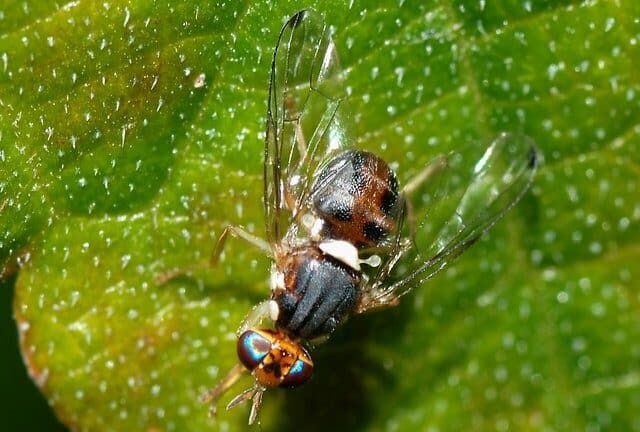
Olive fruit fly and cherry fruit fly
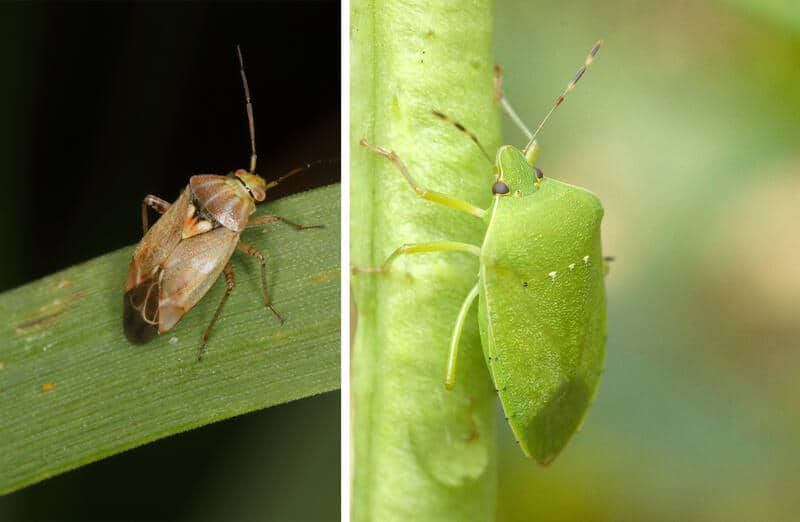
Punaises phytophages
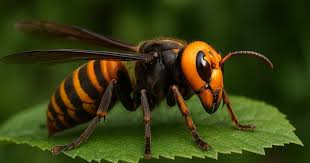
Frelon asiatique
Balanin

Campagnol

Hen density
The beneficial effects on insect pressure vary quite a lot depending on the density and the type of insect. Some trials in Brittany against the apple blossom weevil show interesting results from 27 hens/ha. In parallel, a positive effect of a 50% reduction in codling moth pressure was observed in orchards under nets with a density of 200 hens/ha. Another trial showed a positive effect on the apple sawfly with a density of 70 hens/ha.
- In addition, when the aim is grass management, density should be adjusted to the level of grass growth, so it will vary with the seasons. Overgrazing can lead to selectivity, with plants not eaten by the hens, and will have a negative effect in the long term.
In spring, rotation will be more frequent, at least weekly.
In winter, once the hens have been able to “clean up the fruit and leaves fallen on the ground”, it is wise to remove the animals from the orchard so that beneficial invertebrates (ground beetles, spiders…) can develop.
- You also need to plan to move the mobile chicken coop around the orchard to ensure the hens move across the whole plot and have a general rather than localised effect.
- It is important to note that the reduction in insect pressure will be effective during the larvae hatching period, and during this period you must ensure frequent rotation of the hens to cover as much area as possible.
In summary, our recommendations are as follows:
- Start with a base of 100 hens on 1 ha (10,000 m²) of orchard:
- Either divide your plot into four paddocks of 2,500 m² (i.e. 50 m x 50 m) and move your chicken coop every week or every 15 days to each of the 4 paddocks.
- Or divide your plot into paddocks of 20 m x 20 m and move your coop every 2 or 3 days by 20 m.
- This way, over a month your chicken coop returns to the starting area, which encourages grass regrowth, maintains insect pressure and spreads fertilisation evenly.
Frequent rotation is crucial to avoid soil degradation and excessive nitrogen input, and to encourage the birds to move across the whole orchard so that larvae cannot proliferate in spring. It also promotes the birds’ welfare, as they will always have new areas to explore and a renewed supply of natural food.
Fencing
Install electric fences to protect the hens from predators such as foxes and to stop them from escaping. An electric net with a permanent power supply is essential to ensure their safety.

In practice, nothing requires you to fence around each paddock (in both options we suggest, the fence can be moved from one row of the orchard to another one or two rows further along, alternating. This requires a shorter fence perimeter). Another option is to fence a very wide area, one hectare in our example, which avoids moving the fence but requires a larger investment in fencing. Moreover, the fence must be kept in good condition, so making it too large may also mean that you will not spot faults and will find holes, but it will be too late: predators will already have done their work.
Our recommendation is to fence a fairly large perimeter (for example 2,500 m² or 5,000 m²), because moving the fence is quite time-consuming.
It is also possible to have a chicken coop with an attached aviary, which avoids the need for a fence; however, the hens will not be able to go under the trees. It is still worth considering, as it saves a lot of time and is perfectly suited if you are aiming at soil fertilisation or if your priority is to make your flock profitable.
One thing to know is that outdoor farming regulations require a run of 4 m² per hen. However, these 4 m² are counted over the hens’ lifetime, so when you move the coop, the areas add up.
3. Choice of breeds
– Suitable breeds
Depending on your objective!
If your number one objective is insect predation, opt for hardy breeds well suited to outdoor life and insect hunting, such as the Grise du Vercors or the Noire de Janzé, or for dual-purpose or farm breeds (Marans, Coucou de Rennes, Rhode Island, etc.).
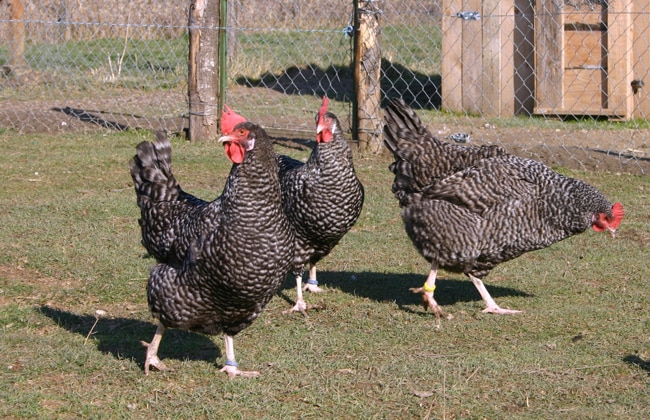
If your number one objective is egg production for income diversification, opt for conventional breeds (Lohmann, Isa Brown, etc.) or dual-purpose or farm breeds.

Favour point-of-lay hens (4 months old) that have good foraging potential. If you start with chicks, foraging capacity will be low, mortality higher and the time to devote to your flock greater.
No regulation prohibits keeping poultry in orchards (particularly with regard to salmonella risks). The regulations only state that the birds must be removed before the fruit is harvested, especially if you harvest fruit fallen on the ground such as hazelnuts.
However, it is forbidden to mix several poultry species, such as geese and hens. Farming regulations require a dedicated run and building for each type of poultry.
4. Equipment and management of the coops

Mobile chicken coops: coops must be easy to move. Choose the size according to your level of mechanisation. A coop with a capacity of more than 100 hens will necessarily require a tractor. Insulation and ventilation of the coop should be a priority to provide proper conditions in cold weather or summer heat depending on the region. Automating the closing of the pop-holes, nest boxes and lighting can save you a lot of time and improve your profitability.
Regulations set thresholds for the surface areas of coops, nest boxes and perches according to the number of hens. The rules differ depending on whether you are aiming for organic or conventional egg production.

Additional facilities: make sure there are shaded areas (especially in a young orchard) and a refuge area for the coop.
Alongside the coop, you need to provide a water supply and a buffer stock of feed nearby; mains electricity is not necessary, as you can run on fences and automation powered by solar or battery.

At health level, a biosecurity lock at the entrance to the rearing area is also mandatory.
5. Feed and watering
Fresh water of drinking quality must always be available. There are different types of watering equipment.
Complete commercial feed with a formulation designed to optimise laying performance OR, if the expected laying performance is limited, a supply of whole/crushed grains (and soybean meal or a commercial protein supplement) is possible
Possible rationing, to be adapted according to
1) the technical performance expected from the hens
2) the need for the hens to prey on orchard pests. In all cases, take care to cover the hens’ maintenance needs. The standard for laying hens to achieve optimum egg production is 130 g/hen/day
6. Health and regulatory management
- Biosecurity: comply with biosecurity standards, in particular for vaccination (salmonella) and health monitoring. If the flock has more than 250 hens, regular analyses must be carried out. Also find out about avian influenza risks in your area. In a Particular Risk Zone (ZRP), periods of confinement must be planned.
- Parasites : pay particular attention to external (lice) and internal (worms) parasites. Preventive care is recommended (macerations, fresh garlic in the feed, unpasteurised cider vinegar in the drinking water, essential oils for the environment, herbal remedies, etc.).
- Hen predators: pay particular attention to foxes, martens, stone martens, buzzards and… humans (beware of theft; favour plots that are not visible from a road or are protected by houses).
- Orchard treatments: systematically keep the hens out during treatments and wait the recommended time before returning to the plot, depending on the treatments carried out.
- Regular weighing of the hens: on arrival of the flock, at the start of laying, at peak lay, etc., to monitor body condition.
- Traceability and records: keep accurate records of flock management, feed flows and plant protection treatments in the orchard.
7. Initial investment and financial management
- Installation costs: the average installation cost is estimated at €50 to €100 excl. VAT per hen, depending on size and on the level of quality and autonomy. The main expenses to plan for are fencing and additional equipment depending on the type of coop.
- Income: selling eggs can generate a regular income. For example, 200 hens can produce annual income of up to €25,000 depending on the strategic choices made, the laying rate, the percentage of downgraded eggs and the selling price.
8. Astuces et bonnes pratiques
- Introducing the hens: keep the stress on point-of-lay pullets to a minimum by limiting the duration of the placement operation. Leave the pullets in the building for at least 24 hours so that they recognise it as their home and, once the pop-holes are opened, are able to return on their own in the evening. Depending on the age of the pullets at placement, keep them shut in for at least 2 weeks to limit floor laying.
- Choosing your coop well: dimensions, ergonomics of egg collection, ease of moving, suitability for the animals’ needs, electrical autonomy, cost, durability of materials, etc.
- Frequent rotation: move the coops regularly to spread the droppings and avoid nitrogen concentration in a single area.
- Run maintenance and rotation: make sure the grass is not too tall before introducing the hens, as they will not eat plants that are too mature (woody). Also make sure there is no place on the run that encourages laying (shelter or other).
- Rationing: supplement the hens’ feed with cereals or protein crops depending on the season, taking into account their natural food intake in the orchard and your need for pest predation
Additional resources (in French):
Technical guide: Raising laying hens in organic farming, ITAB and partners, 2024
DEPASSE project technical sheet no. 3
Biosecurity guide for small farms, Confédération paysanne
Poultry biosecurity sheets, ITAVI
Farmer testimonials:
Sheet on apple sawfly management, combination of levers, DEPHY network 2021
Biofil article no. 128, 2020, pp. 62-64
The M’TOOL manual for poultry care
Technical guide – Tree planting on poultry runs – Casdar Poultry Runs
Guide to dual-purpose poultry breeds, Agribio 84 – Montpellier SupAgro